

Navajo arts and crafts aren’t just beautiful; they’re a vibrant tapestry of culture, history, and creativity that’ll leave anyone in awe. From intricate pottery to stunning textiles, these masterpieces tell stories that echo through generations. Imagine wrapping yourself in a handwoven blanket that’s as warm as your grandma’s hug—now that’s a conversation starter!
Overview of Navajo Arts and Crafts
Navajo arts and crafts showcase a rich cultural heritage that reflects the identity and traditions of the Navajo Nation. Pottery represents one of the oldest art forms, often featuring intricate designs and techniques passed down through generations. Textiles stand out for their vibrant colors and detailed patterns, with handwoven rugs and blankets conveying stories and themes significant to Navajo life.
Jewelry, crafted from silver and turquoise, epitomizes craftsmanship and artistry. Each piece tells a tale of the land and its resources, highlighting traditional techniques like stone cutting and overlay. Basketry also plays a vital role, with artisans using local materials to create functional and decorative items that preserve historical practices.
Calligraphy emerges in Navajo arts, with symbols and patterns often reflecting spiritual beliefs. Sculpture, though less common, finds its place in contemporary expressions where traditional and modern methods intertwine. Community events often celebrate these crafts, fostering collaboration among artisans and strengthening cultural bonds.
The influence of storytelling permeates Navajo arts, encouraging the sharing of history and identity through every creation. Contemporary trends continue to evolve while remaining rooted in traditions. Each piece of art acts as a conversation starter, inviting appreciation for the skill involved and the stories behind them.
Traditional Navajo Textiles
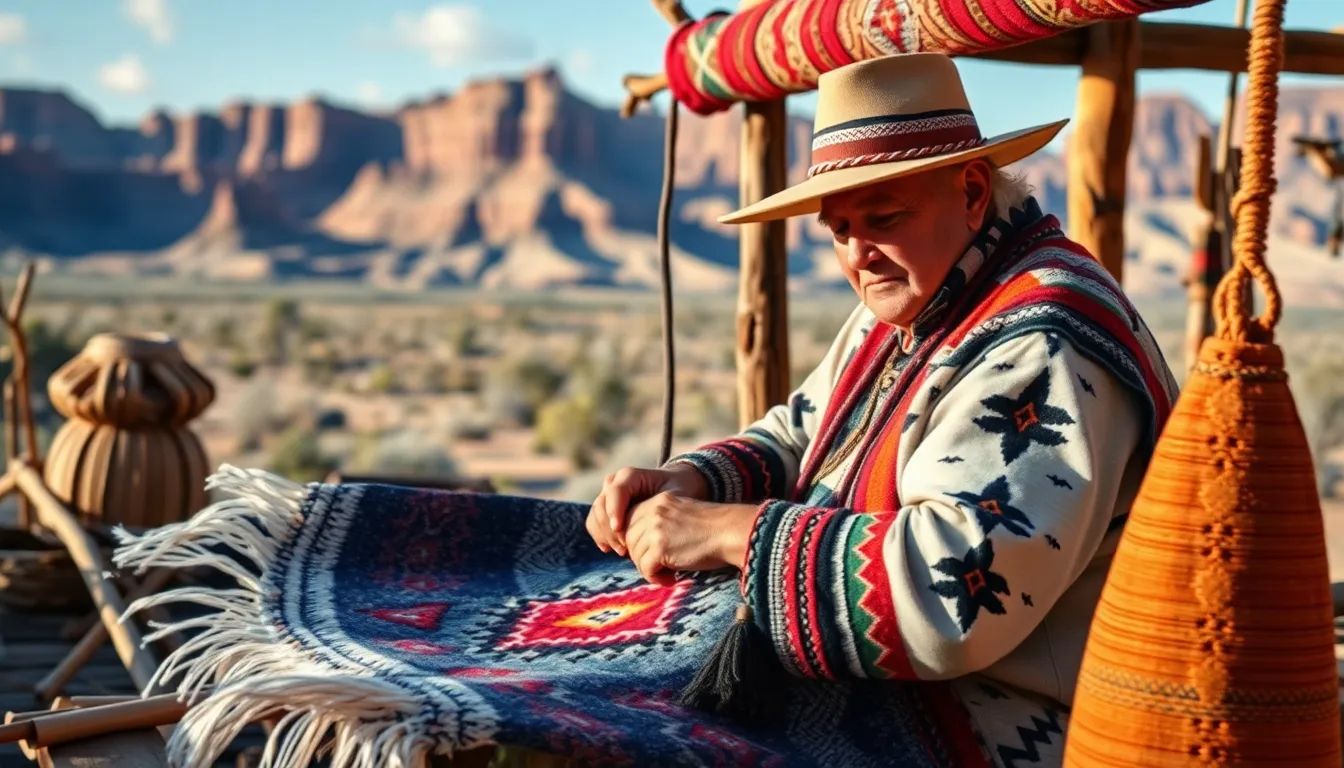
Traditional Navajo textiles hold deep cultural significance, showcasing the rich heritage of the Navajo people. These textiles, particularly rugs and blankets, represent craftsmanship and historical narratives.
Types of Weaving
Rug weaving occupies a central role in Navajo culture. Each rug features intricate designs, reflecting various techniques, including vertical and horizontal methods. Artists often use natural fibers, such as wool, known for durability. The colors come from natural dyes, emphasizing the connection to the environment. Various weavers produce distinctive styles, enabling diverse patterns and textures.
Patterns and Symbolism
Patterns within Navajo textiles convey essential stories and beliefs. Geometric shapes often symbolize elements of the Navajo worldview, such as the four sacred mountains. Spirals represent the cycle of life, while diamonds signify protection and balance. Each design element tells a unique story, communicating cultural heritage. Using these symbols fosters a deeper understanding of Navajo identity, allowing wearers to connect spiritually with their ancestors.
Navajo Jewelry
Navajo jewelry is renowned for its intricate designs and cultural significance. Silversmiths create unique pieces that serve as both adornments and storytellers.
Materials Used
Silver stands out as the primary metal, valued for its workability and brilliance. Turquoise, obtained from the southwestern United States, complements silver, providing a vibrant contrast. Coral, jet, and other gemstones also appear, adding depth and variety. Natural materials such as shell and bone enrich the designs, showcasing Navajo ties to the land. Each component carries historical importance, embodying tribal identity and connection to the environment.
Techniques and Styles
Silversmithing techniques include intricate stamping and overlay methods. Each technique influences the final look and narrative of the piece. The application of stone inlay highlights geometric patterns, reflecting cultural heritage. Techniques like repousse create depth, enhancing visual appeal. Traditional styles emphasize simplicity combined with elegance, while contemporary designs often merge modern aesthetics with traditional motifs. Navajo jewelry serves not only as fashion but also as an expression of identity, ultimately connecting wearers to their ancestry.
Pottery and Ceramics
Navajo pottery and ceramics showcase a rich heritage and artistic expression. Intricate designs represent cultural narratives while demonstrating craftsmanship.
Historical Significance
Historically, pottery served as essential vessels for storage and cooking in Navajo life. Its significance extends beyond utility, embodying stories and cultural traditions passed through generations. Women artisans often crafted pieces using hand-coiling techniques, which emphasized individuality. Each pot features distinctive motifs that reflect the landscape, spirituality, and daily life of the Navajo people. Items like jars and bowls were typically adorned with symbols carrying special meanings, such as water or fertility. These artistic expressions became a way for communities to preserve their histories and share their identities.
Modern Innovations
Innovations in Navajo pottery merge traditional techniques with contemporary designs. Nowadays, artisans blend new materials and approaches, accommodating evolving tastes. Environmental sustainability often influences modern practices, with some potters incorporating eco-friendly methods and ingredients. Enhanced glazing techniques and innovative firing processes create vibrant finishes and varied textures. Collaborative workshops foster creativity and knowledge exchange among artisans, pushing boundaries while honoring traditions. Navajo potters increasingly explore thematic series, featuring modern interpretations of ancestral stories, allowing art enthusiasts to connect with their cultural roots in innovative ways.
Impact on Culture and Community
Navajo arts and crafts significantly shape cultural identity and community relationships. Each artistic expression represents a vessel for storytelling, reflecting the history and values of the Navajo people. Pottery, textiles, and jewelry are more than mere objects; they symbolize a deep connection to the land and heritage.
Community events play a crucial role in fostering collaboration. Artisans gather to share techniques, exchange ideas, and strengthen bonds. These gatherings not only emphasize traditional skills but also encourage the integration of contemporary trends that dialogue with historical practices. Participation nurtures creativity, enabling artisans to innovate while honoring ancestral methods.
Traditional patterns in textiles convey profound themes intrinsic to the Navajo worldview. Geometric shapes represent natural elements, spiritual beliefs, and ancestral stories. Unique rug designs illustrate these narratives, allowing wearers to connect to their roots and promote cultural awareness within a broader context.
Jewelry crafted from silver and turquoise embodies community pride and craftsmanship. Each piece tells the story of the earth’s resources and the artistry of the maker. Intricate designs invite conversation, fostering appreciation for the personal stories intertwined within every creation.
Basketry stands as a testament to the utility and aesthetics of Navajo craftsmanship. Functional items serve both practical and decorative purposes, preserving historical practices while adapting to modern needs. Calligraphy appears in various forms, symbolizing spiritual themes and enhancing the cultural richness of the arts.
Overall, Navajo arts and crafts serve as a bridge between generations. Artisans maintain traditions while embracing new influences, demonstrating resilience and adaptability. This dynamic interplay cultivates a vibrant cultural landscape that encourages ongoing dialogue and community cohesion.
Navajo arts and crafts represent a vibrant tapestry of culture and history. Each piece created by artisans not only showcases unparalleled skill but also serves as a testament to the stories and traditions of the Navajo people. As these crafts continue to evolve, they maintain a strong connection to their roots while embracing modern influences.
Community engagement and collaboration among artisans ensure that these artistic expressions thrive, fostering a sense of identity and belonging. The beauty of Navajo arts lies in their ability to connect individuals to their heritage, inviting appreciation for the intricate narratives woven into every creation. This ongoing journey highlights the resilience and adaptability of Navajo culture, enriching both the artisans and those who cherish their work.